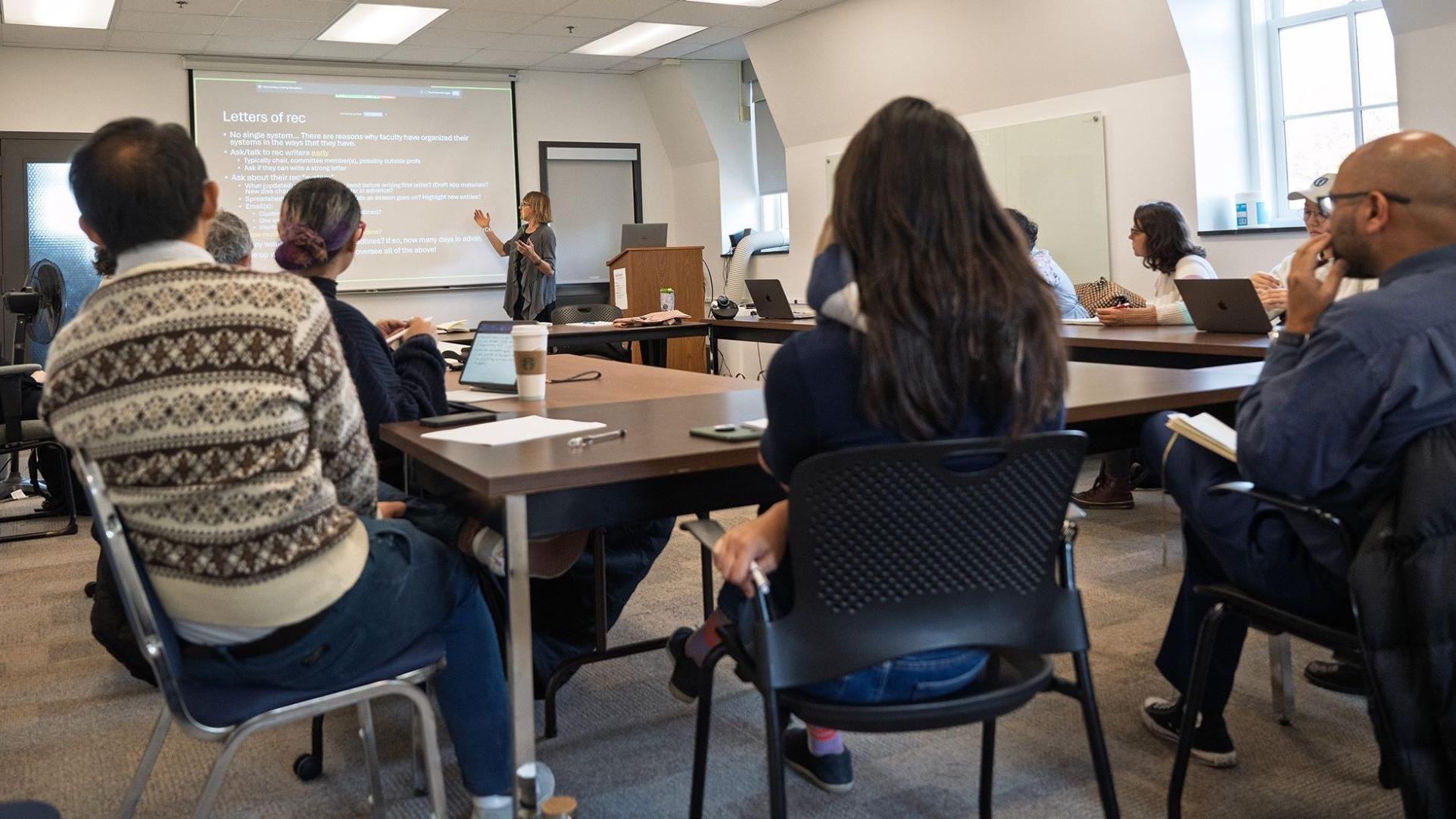
The Department of Science & Technology Studies (S&TS) at Cornell is concerned with understanding the larger ethical, social, and political dimensions of science-intensive issues. Science and technology are at the core of many of the most important concerns or topics of our day, from the control of military technology, to the ethics of assisted reproduction, to privacy on the Internet. The thread connecting these diverse issues is a shared understanding of science and technology as inherently social activities that are best studied from an interdisciplinary perspective.
Cornell faculty, including some in the College of Arts and Sciences, are expanding AI classroom experiments while preserving learning. Across disciplines, instructors use AI tools while emphasizing student engagement and verification.
Cornell University vice provost Steven Jackson was named the fall 2026 Kluge Chair in Technology and Society at the Library of Congress. A professor in the College of Arts and Sciences, Jackson will research American computing in the library's collections.
Professor Sara B. Pritchard’s book "Transforming Night" examines rising light pollution and its environmental impacts. In it, the Cornell College of Arts & Sciences scholar traces artificial illumination’s rapid growth, links it to environmental justice, and urges action on satellite-driven nighttime brightness.
History teaches us that maps and the names, territories and landmarks they include or exclude always have political consequences, Cornell science and technology studies scholar Christine Leuenberger writes in an opinion article for MSNBC.
An innovative major in the College of Arts & Sciences is being expanded and refined to highlight its combination of science, social science and the humanities and its relevance to careers today.
Leading a university-wide Cornell Unplugged event Sept. 14-20 is Cornell College of Arts and Sciences professor Steven Jackson, Sustainable Computing Working Group chair and vice provost for academic innovation. He says the event promotes smart and thoughtful tech.
An interview with Christa Kuljian about her book "Our Science, Ourselves: How Gender, Race, and Social Movements Shaped the Study of Science" (2024) and the legacy of Cornell University historian of science Margaret Rossiter.
Land Acknowledgement:
Cornell University is located on the traditional homelands of the Gayogo̱hó:nǫ' (the Cayuga Nation). The Gayogo̱hó:nǫ are members of the Haudenosaunee Confederacy, an alliance of six sovereign Nations with a historic and contemporary presence on this land. The Confederacy precedes the establishment of Cornell University, New York state, and the United States of America. We acknowledge the painful history of Gayogo̱hó:nǫ' dispossession, and honor the ongoing connection of Gayogo̱hó:nǫ people, past and present, to these lands and waters.
This land acknowledgment has been reviewed and approved by the traditional Gayogo̱hó:nǫ' leadership.